
Why Infrared Imaging Matters During a Home Inspection
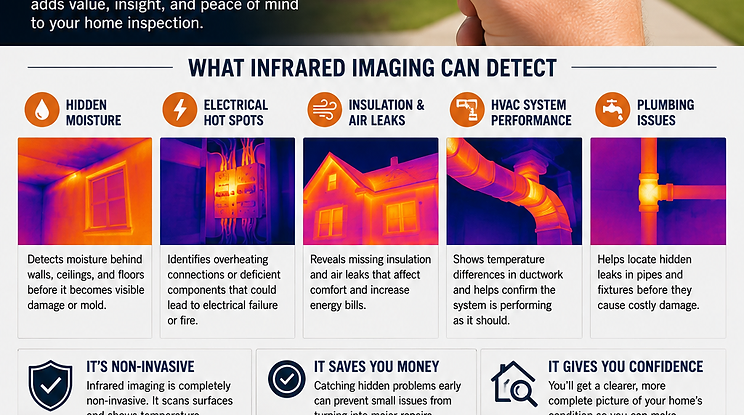
Some of the most important problems in a home aren't visible to the naked eye. Infrared imaging gives your inspector another way to look for clues hiding behind walls, ceilings, and floors.
Some of the most important problems in a home aren't visible to the naked eye. Infrared imaging gives your home inspector another way to look for clues hiding behind walls, ceilings, and floors.
A home can look perfectly fine on the surface while moisture, overheating electrical components, or missing insulation may be developing out of sight. That's where an infrared camera can add valuable information to a professional home inspection.
What is infrared imaging?
Infrared, or thermal, imaging detects differences in surface temperatures. During an inspection, a thermal camera can highlight unusual hot or cold areas that may warrant further investigation.
What can it help detect?
Infrared imaging can help an inspector identify conditions associated with:
- Hidden moisture — Temperature differences may help locate areas affected by roof or plumbing leaks.
- Electrical hot spots — Overheating breakers, wiring, or electrical connections can sometimes stand out on a thermal scan.
- Missing insulation and air leaks — Hot or cold areas in walls and ceilings may indicate insulation deficiencies or unwanted air movement.
- HVAC problems — Thermal imaging can help evaluate temperature differences at supply and return registers and identify areas where conditioned air may be escaping.
- Plumbing leaks — Temperature patterns can provide clues to moisture around pipes, fixtures, walls, and ceilings.
It's non-invasive
One of the biggest advantages is that infrared imaging doesn't require opening walls or damaging finishes. It allows an inspector to scan accessible surfaces quickly and investigate suspicious temperature patterns more closely.
Thermal imaging isn't X-ray vision
An infrared camera doesn't actually see through walls, and an unusual temperature pattern doesn't automatically mean there's a defect. The findings need to be interpreted by a knowledgeable inspector and confirmed using other inspection methods when appropriate.
Why it matters when buying a home
Discovering a moisture problem, electrical hot spot, or insulation deficiency before closing could help you avoid unexpected repairs after moving in. Infrared imaging provides another layer of information to help you better understand the condition of your future home.
The bottom line
A good home inspection is about finding clues others may overlook. Adding infrared imaging can help uncover potential problems earlier, provide a more complete picture of the property, and give you greater confidence in one of your biggest investments.
Inspecting more than what meets the eye — so you can buy, own, and protect your home with confidence.
Know exactly what you're signing up for — before you close.
Schedule your Central Florida home inspection today and get a clear, contractor-grade report you can actually understand. We respond within 24 business hours.